

Does Home Staging Pay for Itself? An Honest Answer

What the research says, what I see on my own jobs, when it does not pay, and how to work out your own number before you spend anything

IN BRIEF
Does home staging pay for itself? Often, but nobody can promise it. Around seven in ten UK agents surveyed by the Home Staging Association said staging lifted offers by 1% to 10%, and on a £500,000 flat a £2,550 staging bill is about half a percent of the price. It stops paying when the price is wrong or the property would have sold anyway.
People ask me this on almost every call, usually in the first two minutes. I understand why. You are being asked to spend money on a property you are trying to sell.
So here is the honest answer. Sometimes yes, sometimes no, and anyone who promises you a guaranteed return is selling something. This article shows you the evidence, where it is weak, and how to work out your own number before you pay anyone, including me.
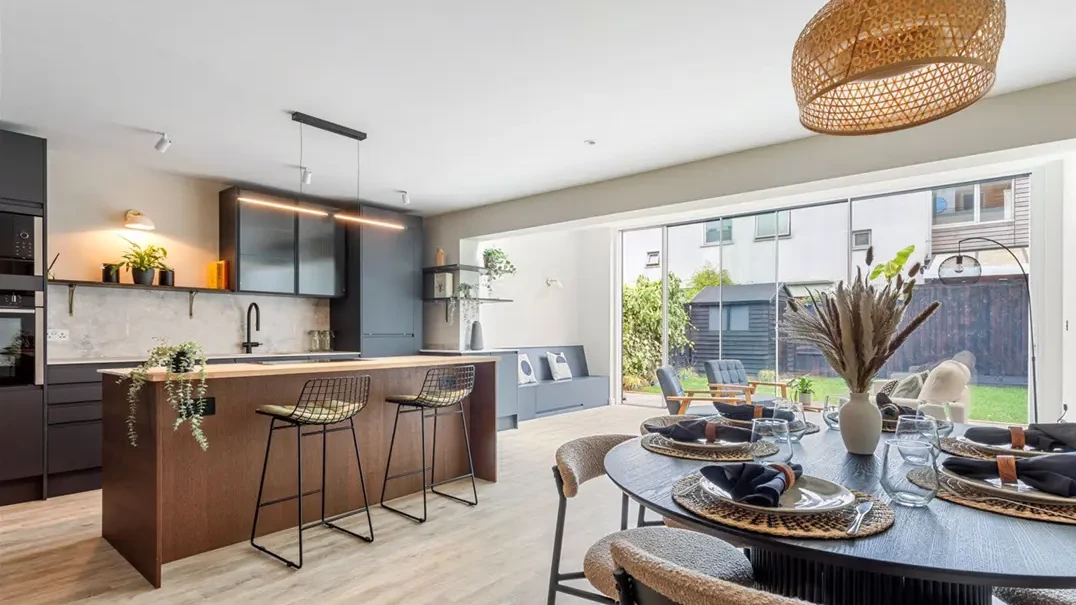
What does the research actually say about staging?
The best UK evidence is surveys of estate agents, and it points one way: staging helps. How much it helps is an opinion, not a measurement.
In a Home Staging Association report published in 2019, 70% of agents said staging increased the offer value by between 1% and 10%, and 16% said the rise was 7% to 10%. An earlier survey of 400 UK property professionals, run between December 2017 and March 2018, found 95% saying staged homes sell faster than unstaged ones.
In the United States, the National Association of Realtors 2023 Profile of Home Staging found that 48% of sellers’ agents said staging reduced time on the market. Twenty percent of agents said it raised the dollar value offered by 1% to 5%, and 81% of buyers’ agents said it made it easier for buyers to picture the property as their home.
Now the caution. These are opinions, not measurements. Nobody has sold the same property twice, once staged and once not. The Home Staging Association is also a trade body for stagers, so it has an interest in the answer, and you should know that.
You will also see staging returns of several hundred percent quoted online. Those come mostly from American trade bodies and are reported by the stagers themselves. I would not rely on them for a London flat.
One more number is worth knowing. Rightmove analysis of 300,000 newly listed homes, reported by Bidwells, found that properties which needed a price reduction took twice as long to sell on average as those that did not. A reduction is not a free reset. It usually means the first attempt missed.
What do I see on my own jobs?
Two recent jobs, and I want to be clear that two jobs is a story, not a statistic.
A two bedroom flat in North London had been on the market for nine months, empty. We staged it. The owner changed agent, the new agent took new photographs of the staged flat, and it went under offer at the asking price within three weeks.
A property in East Dulwich had been empty and on the market for six months. We staged it, the owner changed agents, and it went under offer in the first week at £10,000 above the new asking price.
In both cases we changed more than the furniture. There was a new agent, new photographs and a fresh listing, which gives a property a break from the portals and a new run at them. I cannot split the effect between those changes, and neither can anyone else. What I can say is that staging is what made the new photographs worth taking.
When does staging not pay for itself?
Staging does not pay when it is covering a problem the price has not acknowledged.
- The price is wrong. If you are 10% or more above comparable current listings, staging will not close the gap. I will not stage a property I think is overpriced by more than about that, because you would be paying me to lose more slowly.
- It is already selling. If you are getting steady viewings and offers, spending on presentation is spending on a problem you do not have.
- The buyer is paying for the project. A property that needs a full renovation and is priced for the work is bought on the numbers, not on the feeling.
- There is a defect furniture cannot fix. A short lease, a structural problem or a failed survey will not be solved by a sofa.
The first article in this series covers how to tell which of these applies to you: why your London property is not selling.
How do you work out your own number before you spend anything?
Compare the staging bill with what a month on the market costs you, and with the price reduction you would otherwise take.
First, get a fixed quote. We quote within 24 hours from a floor plan and a few photographs. Get at least two quotes from anyone, because prices vary enormously. In my August 2026 mystery-shop of 14 London staging companies, the cost per square foot to stage a two bedroom property ranged from about £1.58 to £11.97, and the typical two bedroom flat worked out at about £3,900 for eight weeks, all in.
Second, add up what a month costs you. Mortgage interest if you still owe on the property, service charge and ground rent if it is leasehold, insurance, utilities, and council tax where it applies. If you are moving on to a purchase, add the cost of that being delayed.
Third, ask your agent what reduction they would suggest. A 5% reduction on a £500,000 flat is £25,000.
Fourth, compare. If the staging bill is small next to both numbers, it only has to work a little to pay for itself. If it is large next to either, think harder before you spend.
| Worked example | Figure |
|---|---|
| Sale price | £500,000 |
| Two bedroom staging, six weeks (our published price) | £2,550 plus VAT (£3,060) |
| Staging as a share of the sale price | About 0.5% before VAT, 0.6% after |
| Reduction an agent might suggest (5%) | £25,000 |
| Holding costs per month (assumed, use your own) | £1,800 |
| Two extra months on the market | £3,600 |
Illustrative figures to show the method. They are not data. Replace the sale price and holding costs with your own.
What does an extra month on the market cost?
An extra month costs you your holding costs plus the harder to count cost of a listing that is going stale.
London homes take around 48 days on average to find a buyer, so six or seven weeks without an offer is normal. The point to act is eight to ten weeks, when a listing starts to look stale to buyers and to the portals.
There is a second clock, and it is shorter. In my experience the first two weeks on Rightmove and the other portals is when a listing gets most of its attention. Listing empty to see how it goes spends those two weeks on the weakest version of your property.
That is the strongest argument I know for staging before you list rather than after. It rests on my experience rather than a survey, so weigh it accordingly.
Frequently asked questions
How much does home staging cost in London?
Our published prices start from £1,999 for a one bedroom property, and a two bedroom property is £2,550 plus VAT for six weeks. We quote within 24 hours of receiving a floor plan and a few photographs. Other London companies vary widely, so get more than one quote.
Does home staging increase the sale price?
Agents think it can. In Home Staging Association research, around seven in ten UK agents said staging raised offers by 1% to 10%. There is no controlled UK data, so treat it as likely rather than guaranteed.
Does home staging help a property sell faster?
Agents say yes. In a Home Staging Association survey of 400 UK property professionals, 95% said staged homes sell faster. On my own jobs, properties that had sat for months went under offer within weeks, although each also changed agent and photographs.
Is staging worth it if my property is already selling?
Usually not. If you are getting steady viewings and offers, you do not have a presentation problem. Ask your agent for viewing and offer numbers before spending anything.
Who pays for home staging, the seller or the agent?
Usually the seller. In the same 2018 survey, 76% of respondents said the seller pays before listing. Some agents will arrange it, so ask yours.
Want your own number?
Send me the listing link, or a floor plan and a few photographs, and I will give you a fixed quote within 24 hours. I will also tell you whether I think staging will pay for itself on your property. If I think it will not, you will hear that from me for free.
Sonja Townsend, Director. T: +44 7572 880 266. sonja@londonpropertystaging.com
This article reflects the author’s professional experience and the London market at the time of writing. It is general guidance, not financial advice or advice on a specific property. Figures are from the sources listed below and will be updated as new data is published.
Sources used
- Estate Agent Today, “Agents say ’staged’ homes sell three times faster”, August 2019 (Home Staging Association report).
- Estate Agent Today, “Dressing a home boosts sale price up to six per cent, say agents”, June 2018 (Home Staging Association survey of 400 UK property professionals, December 2017 to March 2018).
- National Association of Realtors, 2023 Profile of Home Staging, as summarised by the Pennsylvania Association of Realtors.
- Bidwells, “Why and how do you stage your property?”, citing Rightmove analysis of 300,000 newly listed homes over four months.
- London Property Staging pricing page, londonpropertystaging.com/pricing, October 2026.
- London Property Staging mystery-shop of 14 London staging companies, August 2026 (competitor figures normalised to an eight week hire, all in).